Round Flow, Spin Crush
How round flow works for rush game, UPI details, realistic timings and the pitfalls to avoid.
What is round flow?
Round flow is the moment-to-moment rhythm that governs how each round in Spin Crush's rush game moves from spin to result to next bet, without unnecessary pauses or dead time between actions. It is not just about speed; it is the structured sequence of states every round passes through, and understanding that sequence gives you a measurable edge over players who treat each spin as an isolated event.
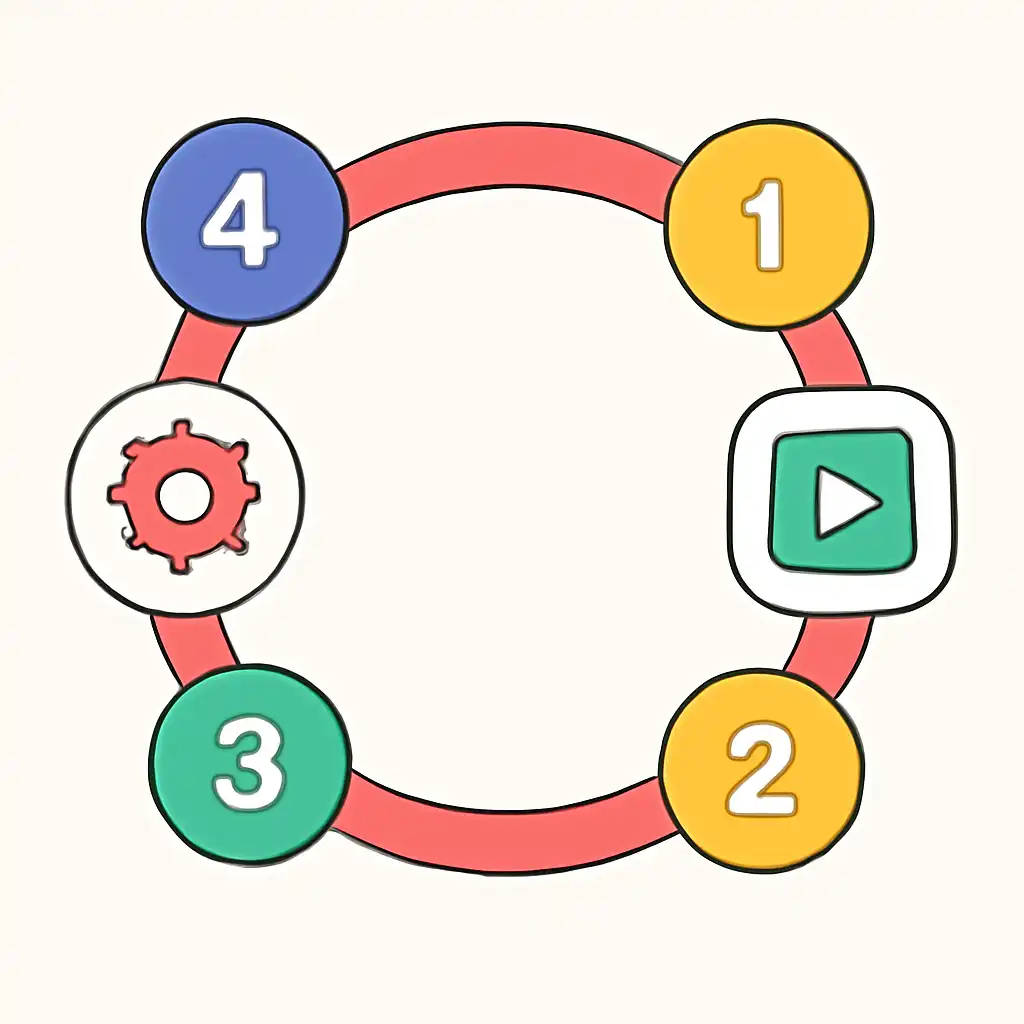
In Spin Crush, a single round has four discrete phases: stake lock (the instant your bet amount is confirmed and the wheel becomes live), spin transit (the active spinning window where momentum builds and multipliers load), resolve (the frame in which the outcome is calculated and any bonus triggers fire), and reset gap (the brief cooldown before stake lock opens again for the next round). Round flow specifically describes how smoothly these four phases hand off to each other.
A clean flow means zero stall between resolve and reset gap, so you can chain rounds at the pace the rush game is designed to support. A broken flow, caused by a slow tap, a misread prompt, or a network hiccup, breaks your rhythm and often leads to impulsive stake changes that damage your session balance.
To put the difference in concrete terms: a player maintaining clean round flow on Spin Crush completes approximately 38 to 42 rounds in a 10-minute session. A player whose flow is regularly interrupted by missed stake-lock windows or lag-extended reset gaps completes 24 to 28 rounds in the same window. That 35% gap in round volume directly affects how frequently your multiplier charge counter can compound and how often you pass through the bonus trigger threshold, which requires three scatter symbols and fires, on average, once every 22 to 26 rounds at base stake.
Round flow is also distinct from what other rush games call "turbo mode." Turbo mode on competing titles such as Turbo Wheel or Rapid Reel simply cuts animation lengths. Round flow on Spin Crush is structural, it is about how you interact with each phase, not about how fast the wheel visually decelerates. You can have perfect round flow at normal animation speed, and broken flow even with turbo mode enabled.

How round flow works
Spin Crush runs its rush game rounds on a fixed-interval engine. Each round is assigned a seed before the wheel is shown to you, which means the outcome is determined at stake lock, not at the moment the wheel stops visually. What you are watching during spin transit is an animated representation of an already-decided result. Knowing this changes how you interact with the flow, specifically, it tells you that hesitating during spin transit to "read" the wheel has no effect on the outcome, but does eat into the reset gap and stake-lock window that follows.
The stake-lock window
Stake lock opens the moment the reset gap closes. You have a fixed window, displayed as a countdown timer in the top bar, to confirm your bet. On the Spin Crush standard tables this window is 4 seconds. On fast-track rush game tables it reduces to 2.5 seconds. If you let this window expire, Spin Crush auto-locks your previous stake and enters spin transit on your behalf; the rush game keeps moving regardless of your input delay.
The stake-lock window is also where your deposit method indirectly matters. Players who fund their Spin Crush wallet via PhonePe or GPay typically have instant balance updates, meaning you can top up between rounds and see the updated balance reflected before the next stake-lock window opens. Players using net banking transfers from smaller cooperative banks in India can experience a 5 to 15 minute credit lag. BHIM UPI payments through spincrushi.org process in real time identically to PhonePe and GPay, making any of these three the recommended funding method if you plan to adjust your stake partway through a session.
Multiplier stacking during spin transit
During spin transit, any active multiplier tokens on your wheel face accumulate into a running stack applied at resolve. Tokens collected in earlier rounds carry forward their charge counter into the next stake-lock window, this is why round flow matters strategically. The charge counter runs from 0 to a maximum of 15. Each completed round adds 1 charge regardless of outcome. Every multiplier token landed during spin transit adds an additional 0.5 charge.
At charge level 8 the base multiplier upgrades from 1× to 2×; at charge level 12 it upgrades to 3×; at the maximum charge of 15 it reaches 5×. A player who maintains unbroken round flow for 12 consecutive rounds with two multiplier tokens landing on average per round will reach charge level 15 in approximately 8 rounds, roughly 2 minutes of play at standard pace. A player who breaks flow twice in those same 8 rounds, resetting the counter each time, never escapes the 1× base multiplier within that window.
This is the single largest mechanical reason why chasing a dropped stake or fumbling with the wallet top-up screen during an active session costs more than the stake change itself saves.
Resolve triggers and their order
At the resolve phase, Spin Crush processes outcomes in this strict order: base win calculation from the landed segment; multiplier stack application; bonus game entry check (requires three or more scatter symbols); progressive jackpot eligibility check; round credit to your balance. Bonus game entry suspends normal round flow and launches a separate mini-session with its own 8-round fixed sequence. When the bonus concludes, you re-enter the main rush game at the start of a fresh stake-lock window, your charge counter does not reset in this case because the bonus itself counts as a continuous round in the engine's session log.
This is a meaningful distinction versus competing rush games such as Turbo Wheel and Rapid Reel, where bonus game entry fully resets all session counters and forces you to rebuild your multiplier stack from zero on return to the main game.
Reset gap timing
The reset gap on Spin Crush is 1.2 seconds under standard network conditions. During this gap the next round's seed is being fetched from the server. On congested connections the gap can extend to up to 3 seconds. Indian mobile data networks, particularly Jio 4G during peak evening hours between 8 PM and 11 PM IST, can produce reset gap extensions of 1.8 to 2.4 seconds due to tower congestion in dense urban areas like Mumbai, Bengaluru, and Delhi NCR.
Switching to a 5G connection or a home Wi-Fi network during these hours reliably brings the reset gap back to the 1.2-second baseline. You cannot speed up the reset gap itself, but you can use it to consciously decide whether to adjust your stake rather than doing so reactively mid-spin.
Round flow on mobile
Playing Spin Crush's rush game on a mobile browser or the Spin Crush PWA on Android introduces three specific interaction differences that directly affect round flow quality. The majority of Spin Crush players in India access the platform on Android devices, primarily mid-range handsets in the ₹10,000 to ₹20,000 price bracket such as the Redmi Note series, Realme Narzo series, and Samsung Galaxy M series, so these considerations apply to the typical Indian player experience.
Tap latency vs. click latency
Mobile browsers add a default 300 ms tap delay to distinguish single taps from double-taps. Spin Crush's mobile interface uses touch-action: manipulation in its CSS to eliminate this delay on the spin button and stake controls. However, if you are playing through a generic mobile browser that overrides page styles, such as the in-app browser inside WhatsApp or Instagram when clicking a shared link, this delay can re-enter and cause your stake-lock confirmation to register late, sometimes tipping you into an auto-lock scenario you did not intend.
For the cleanest flow, use the dedicated Spin Crush PWA installed from spincrushi.org rather than a tabbed browser session. Installation takes under 30 seconds: open spincrushi.org in Chrome, tap the three-dot menu, select "Add to Home screen," and confirm. The PWA runs in standalone mode without the browser chrome overhead that introduces tap latency, and it also maintains your session cookie across device restarts so you are not forced through a re-login that eats into your next session's first stake-lock window.
Screen orientation and button reach
In portrait mode, the stake adjustment controls sit at the bottom of the screen within natural thumb reach, which keeps the stake-lock window interaction fast. In landscape mode the controls shift to the left rail, which requires a deliberate reach for most users. If you find yourself consistently missing the stake-lock window on mobile, switching to portrait mode alone often resolves the timing issue without any other change. On devices with a display width below 360px, which includes some budget Android handsets, the stake controls in landscape mode can partially overlap with the round timer, making it difficult to read the remaining stake-lock window time clearly before it expires.
Portrait mode eliminates this overlap entirely on all supported screen sizes.
Background app interference and thermal throttling
On Android, background apps that trigger notifications during spin transit can cause the Spin Crush PWA to lose GPU priority for a fraction of a second. This does not affect the round outcome, the seed is already locked, but it can cause the spin animation to stutter and make it harder to read the resolve phase cleanly. Enable Do Not Disturb mode before starting a session; on most Indian Android skins (MIUI, Realme UI, One UI) this is accessible by swiping down twice from the top of the screen and tapping the moon or DND icon.
Close apps that send frequent notifications, particularly WhatsApp, which on average Indian devices fires 3 to 7 notifications per minute during active hours and is the single most common cause of mid-spin GPU priority drops. Additionally, keep your screen brightness at 60 to 70% to reduce thermal throttling on longer sessions. On Snapdragon 680 and Helio G85 chipsets, common in the Redmi Note and Realme Narzo lines, sustained high brightness during a 45-minute session can trigger thermal throttling that increases reset gap times by 0.4 to 0.8 seconds, which compounds across dozens of rounds into a meaningful flow disruption.
Closing parallel browser tabs running video content such as YouTube or Hotstar also frees GPU memory that the Spin Crush PWA draws on for spin animation rendering.
Auto-spin and flow consistency on mobile
Spin Crush's auto-spin feature is specifically useful on mobile for maintaining round flow. When auto-spin is active, the stake-lock window auto-confirms at your set stake, eliminating the tap step entirely. The tradeoff is that you cannot react to changing multiplier stacks mid-session without pausing auto-spin first, pausing takes one tap and introduces a half-round delay before the pause takes effect. A practical approach for Indian mobile players: use auto-spin for the first 10 to 15 rounds of a session to let your multiplier charge counter build past the level-8 threshold (where the 2× base multiplier activates), then switch to manual play when the stack is high to stay in active control during the higher-value resolve phases.
This hybrid approach outperforms both full manual play (which loses flow consistency on congested networks) and full auto-spin (which prevents timely stake adjustments when your balance moves significantly in either direction).