Common Mistakes and Safety, Spin Crush
A practical guide to common mistakes and safety for rush game: the steps, the limits and the common mistakes.
What is Common Mistakes and Safety?
In any rush game, the gap between winning consistently and losing repeatedly almost always comes down to avoidable errors and poor safety habits. Common Mistakes and Safety is the practice of identifying the recurring errors players make during Spin Crush sessions, whether in spinning strategy, resource management, or in-game decision-making, and pairing those insights with responsible gameplay habits that protect both your progress and your wellbeing.
Spin Crush is designed to be fast, rewarding, and deeply engaging. The rush game format amplifies every decision: a single misstep in a high-stakes spin round can erase a long streak, while one lapse in safety awareness can turn an enjoyable session into a frustrating one. Understanding what mistakes look like before they happen is the single most effective edge any Spin Crush player can develop.
This is especially relevant for players in India, where mobile-first gaming has grown rapidly and Spin Crush has built a large, active community across states like Maharashtra, Karnataka, Tamil Nadu, and Telangana. Indian players often access Spin Crush on budget Android devices with variable connectivity, an environment that introduces its own category of platform-related mistakes on top of the standard strategic ones. The decisions you make before and during each session determine whether that deposit works for you or against you.
This pillar guide covers every dimension of Common Mistakes and Safety on Spin Crush, from the habitual errors that trip up beginners to the subtler pitfalls that affect experienced players, and from in-game tactical safety to responsible session management. This guide gives you a complete framework for playing smarter and safer every time you open the app.

- Mistake awareness: Recognising patterns of error before they become habits.
- Safety habits: Structuring sessions so that fun stays sustainable over the long term.
- Rush game context: Understanding how the fast-paced rush game format amplifies both mistakes and their consequences.
- Indian platform context: Accounting for the specific devices, payment methods, and connectivity conditions most common among Indian Spin Crush players.
Common Mistakes and Safety Questions
Players across India regularly ask similar questions about mistakes and safety in Spin Crush. Here are the most frequently raised concerns, answered clearly.
Why do I keep losing streaks even when I think I'm playing well?
Most streak-breaking losses in the rush game mode come from one of three sources: spinning at the wrong tempo relative to your current coin balance, ignoring in-game alerts about low resources, or chasing a recovering streak too aggressively after a loss. The feeling of playing well and the reality of playing optimally are often different things, this guide will help you close that gap.
Is there a "safe" amount to spin per session?
Spin Crush does not enforce a hard cap on spins per session, but safety best practice suggests setting a personal spin limit before each session begins. Decide on a ceiling, both in terms of spin count and time played, and commit to it before the rush game energy pulls you into "just one more" territory. A practical starting benchmark for new Indian players is 30 spins per session at a minimum stake level, which allows you to observe game patterns without significant exposure.
What is the most common mistake new players make?
Spending their starting coins too quickly in high-multiplier rush game rounds without first building a foundational coin reserve. New players are drawn to the biggest potential payouts but underestimate how quickly an underfunded account can be depleted by a short losing run. For context, players who start at the lowest available stake tier for their first five sessions consistently retain more playable balance at the two-week mark than those who open at maximum stakes from day one.
Can mistakes on mobile differ from those on desktop?
Yes. Mobile players are more prone to accidental taps and poor screen visibility, while desktop players tend to make faster, less considered decisions because the interface feels less tactile. Both platforms have distinct safety considerations covered in a dedicated section below.
Does Spin Crush offer any built-in safety tools?
Spin Crush includes session reminders, balance visibility indicators, and optional notification controls. Using all available in-app safety features is a core recommendation throughout this guide.
How do Indian payment platforms like PhonePe, GPay, and BHIM interact with safe play?
PhonePe, GPay, and BHIM are the three most widely used deposit methods among Indian Spin Crush players. Each processes transactions almost instantly, which means there is no natural pause between the decision to deposit and the ability to play, unlike bank transfer methods that involve a waiting period. This frictionless flow is convenient but removes one of the few natural checkpoints players have. A recommended safety habit: when depositing via PhonePe or GPay, set a UPI spend limit within the respective app so that your maximum daily Spin Crush top-up is capped at a figure you have chosen in advance, not in the heat of a session.
BHIM users can set similar transaction limits within the BHIM settings menu. This small step converts an impulsive, in-the-moment decision into a pre-committed boundary.
How do I know if I'm playing responsibly?
A simple self-check: if you find yourself thinking about the game during unrelated activities, if you feel frustrated rather than entertained after a session, or if you are adjusting other plans around your play time, these are signals to review your safety habits. Spin Crush is meant to be a source of fun, not stress.
Common Mistakes and Safety on Mobile and Desktop
The platform you use to play Spin Crush shapes the specific mistakes you are likely to make and the safety strategies that work best. India is one of the world's largest mobile gaming markets, with more than 70% of Spin Crush sessions in India played on Android smartphones. That figure makes mobile-specific safety especially important for the Indian player base, though desktop considerations remain relevant for players who access Spin Crush via a laptop or home PC. Below is a direct comparison so you can identify which category applies to your situation and act accordingly.
What to Look For: Mobile vs Desktop Differences
| Factor | Mobile (iOS / Android) | Desktop (Browser / App) |
|---|---|---|
| Accidental inputs | High risk, touchscreen taps can trigger unintended spins, especially on smaller screens under 5.5 inches | Low risk, mouse clicks are deliberate, but fast double-clicking can cause duplicate actions |
| Screen visibility | Balance and multiplier figures can be hard to read in bright outdoor light, a common issue for Indian players using Spin Crush during a commute | Full screen display makes all figures clearly readable at all times; use 100% zoom or higher for best clarity |
| Distraction level | High, notifications, calls, and multitasking interrupt focus mid-round; India's average smartphone user receives over 65 notifications per day | Moderate, fewer interruptions but browser tabs and background apps can distract |
| Connectivity risk | Higher, 4G/5G drops or Wi-Fi switching can cause mid-spin disconnection, particularly in tier-2 and tier-3 cities | Lower, wired or stable home Wi-Fi connections make disconnection events rare |
| Session length tendency | Shorter but more frequent sessions; often played in transit or during short breaks of 10 to 20 minutes | Longer single sessions averaging 45 to 60 minutes; easier to lose track of time without a physical limit |
| Common rush game mistake | Tapping spin before confirming the bet level after screen rotation or app resume | Leaving auto-spin running unattended while switching tabs |
| Recommended safety tool | Enable Do Not Disturb during play; use the in-app session timer; set a UPI daily limit on PhonePe or GPay | Set a visible desktop clock alarm; use the browser's tab audio mute to signal a stopping point |
Mobile-Specific Mistakes to Avoid
- Playing Spin Crush while walking, commuting by auto-rickshaw, or in any situation that divides your attention, distracted play leads to unconsidered bets.
- Allowing the screen to dim and then resuming without checking your current bet settings; the app may have reset or adjusted stake levels on relaunch.
- Ignoring low-battery warnings during a rush game round, a forced shutdown mid-spin can cause confusion about game state on reload. Always play with at least 20% battery remaining.
- Playing on a mobile data connection in an area with weak signal, a disconnection mid-round can result in a spin outcome that is not displayed correctly on your screen.

Desktop-Specific Mistakes to Avoid
- Using auto-spin features without a defined stop-limit, effectively removing yourself from decision-making during the most critical moments of a session.
- Playing across multiple browser tabs simultaneously, which splits attention and makes it easy to miss important game notifications.
- Not logging out between sessions, which creates a frictionless re-entry that can make unplanned additional sessions feel lower-stakes than they are.
Common Mistakes and Safety for New Players
If you are new to Spin Crush or new to rush game formats in general, the learning curve is steeper than the game's polished interface suggests. The following mistakes are the most predictable traps for first-time players, study them before your first serious session.
Mistake 1: Skipping the Tutorial and Demo Modes
Spin Crush provides a free-play or demo environment for a reason. New players who skip directly to live coin rounds routinely burn through their starting balance before they understand how the rush game multiplier system works. Always complete the demo phase first, treat it as a mandatory 15-to-20-minute orientation that costs you nothing but saves you the equivalent of your first ₹200 to ₹500 deposit in avoidable early losses. There is no shortcut that saves as many coins in the long run.
Mistake 2: Betting Maximum on the First Session
Maximum bets feel exciting on day one, but they are statistically the fastest way to exhaust a new account. Safety practice dictates starting at the lowest available bet tier, often ₹1 to ₹5 per spin depending on the active game mode, until you have observed at least 50 complete spin cycles. This gives you real data about the game's rhythm without risking your full balance. Compare this approach to the alternative: a new player opening at ₹50 per spin with a ₹500 starting balance has only 10 spins before they are eliminated from a losing run, versus 500 spins at ₹1 per spin, which is enough to form a genuinely informed view of the game.
Mistake 3: Misunderstanding the Rush Game Multiplier
The rush game mode in Spin Crush applies multipliers that can dramatically increase both wins and losses within a short window. New players often see a multiplier climbing and increase their stake mid-round, not realising the multiplier can reverse just as rapidly. Treat every multiplier spike as a volatility signal, a marker that variance is elevated, not a guarantee of continued upward movement. Experienced players use multiplier spikes as a cue to hold their current bet level or reduce it slightly, not to escalate.
Mistake 4: No Exit Plan
Decide before your session begins at what point you will stop, both a win target and a loss limit. A practical formula for new players: set your loss limit at 30% of your session starting balance and your win target at 50% profit above that starting figure. New players who set no exit conditions consistently play longer than intended, often converting an early winning session into a losing one by staying too long. A ₹300 starting balance, for example, should trigger a stop-loss exit at ₹210 remaining and a win-target exit at ₹450.
Mistake 5: Ignoring the Spin Crush Community Resources
Spin Crush has an active player community across forums, Telegram groups, and social channels, with a particularly engaged Indian player base sharing tips in Hindi, Tamil, Telugu, and English. New players who engage with these resources learn from experienced players' mistakes rather than repeating them personally. The community is also a reliable early-warning system for any bugs, payout anomalies, or promotional bonus changes worth knowing about before your next session.
Safety Checklist for New Spin Crush Players
- Set a maximum session time before opening the app, 30 minutes is a sound starting limit.
- Define a loss limit in rupees that you will not exceed in a single day.
- Enable all in-app notification and safety reminders.
- Start with demo or free-play mode for at least your first three sessions.
- Keep your first live-coin bets at the lowest available stake level.
- If you use PhonePe or GPay to deposit, set a daily UPI spend limit that caps your maximum possible top-up.
- Tell a trusted friend or family member that you have started playing, as an informal accountability step.
How Common Mistakes and Safety Works
Understanding why mistakes happen in Spin Crush, and why safety frameworks are effective, requires a basic grasp of how the rush game format is designed to engage players and where those design elements interact with human psychology.
The Rush Game Engagement Loop
Spin Crush is built around a core engagement loop: spin → outcome → reward or near-miss → next spin. The rush game mode accelerates this loop with time pressure, animated multipliers, and audio cues that trigger the brain's reward system. This is entertaining by design, but it also means that without conscious safety structures, players can find themselves spinning more frequently and with less deliberation than they intended. Research on digital gaming behaviour consistently finds that fast-loop formats increase the number of decisions made per hour by 3x to 5x compared to slower-paced games, which is why the same flawed decision repeated across a fast rush game session produces losses far faster than in a traditional format.
How Mistakes Compound in Rush Game Mode
A single mistake in a standard spin round carries limited consequences. In rush game mode, however, mistakes compound because the time pressure encourages reactive rather than reflective decision-making. A player who increases their bet after a loss (a behaviour known as "chasing") in rush game mode will do so faster and more often than in a standard game, because the rapid pace makes each individual decision feel smaller and less consequential than it actually is.
In practical terms: a player chasing losses in standard mode might make 4 to 5 escalated bets before pausing to reassess, while the same player in rush game mode may make 15 to 20 escalated bets before the same natural pause point is reached.
How Safety Structures Interrupt the Cycle
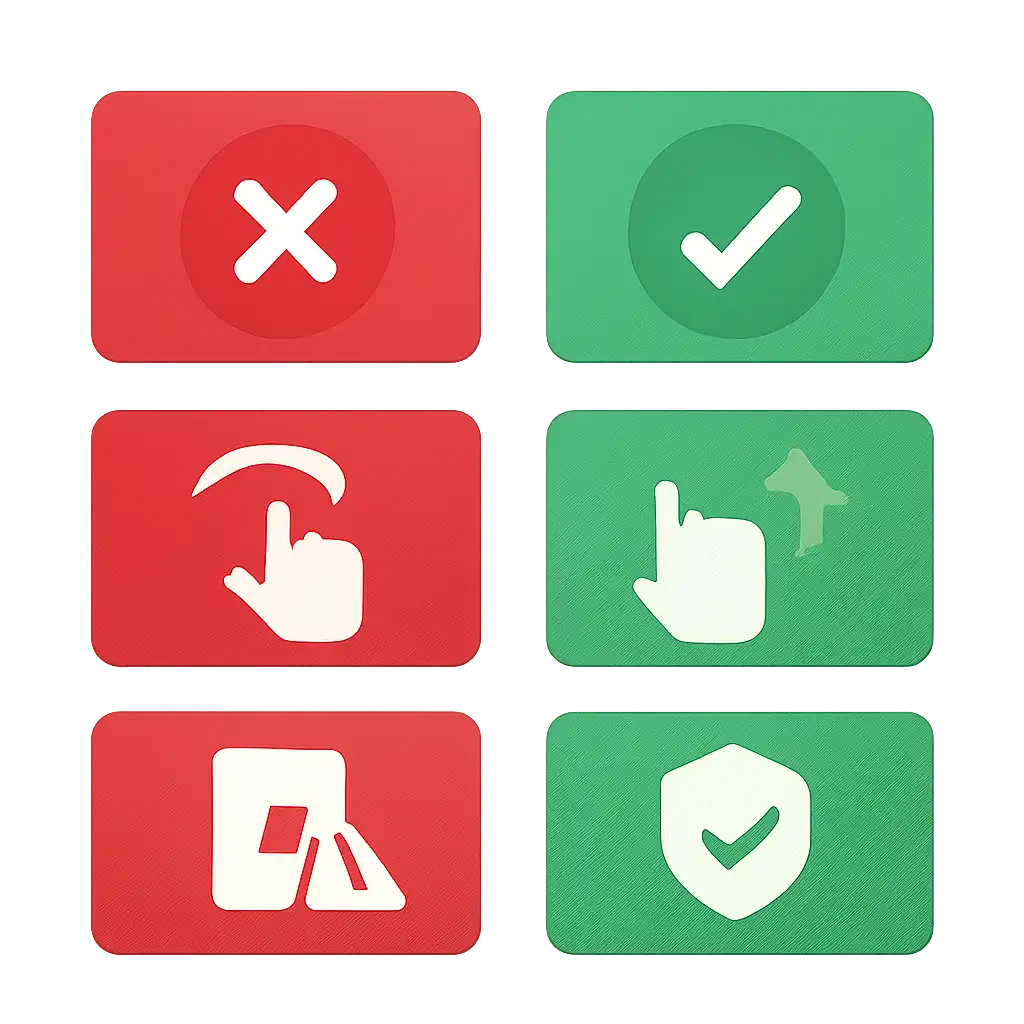
Safety measures, session timers, loss limits, bet-level caps, and UPI transaction limits via PhonePe or GPay, work by reintroducing deliberation into an environment designed to minimise pause points. When you commit to a loss limit before play, you remove the in-the-moment decision of whether to continue. Pre-commitment is more effective than willpower exercised during play, because the rush game environment is specifically optimised to make continued play feel like the natural choice. Think of pre-committed limits as the equivalent of a circuit breaker: they don't require you to be stronger than the situation, they simply stop the current before it can cause damage.
The Role of Self-Awareness
Recognising the emotional state you are in when you open Spin Crush is a foundational safety skill. Players who are stressed, fatigued, or frustrated are statistically more likely to make impulsive decisions, and the rush game format will convert those impulsive decisions into losses faster than any other game type. A key rule for safe Spin Crush play: do not start a rush game session when you are already in a negative emotional state. The goal of the game is entertainment, if the preconditions for enjoyment are absent, the session should be postponed.
What Responsible Platforms Provide
Spin Crush supports responsible play through several platform-level mechanisms. These include visible balance displays that are never obscured by animations, optional session duration reminders, and clear access to responsible play resources. Familiarise yourself with every one of these tools, they are not obstacles to fun but instruments that make sustained, enjoyable play possible over the long term. Spin Crush's approach is comparable to the responsible gaming frameworks implemented by established Indian digital entertainment platforms: transparency, user control, and easy access to limits.